Table of Contents
- Quick answer: painting a condo ceiling
- What tools and paint do you need?
- How do you paint a condo ceiling step by step?
- How do you avoid lap marks on a ceiling?
- Why paint the ceiling before the walls?
- What about high ceilings in Toronto condos?
- What are the pro tips for a flawless ceiling?
- What do pros charge to paint a condo ceiling?
- When should you call a pro?
Quick answer: painting a condo ceiling
To paint a condo ceiling well, prep the surface, prime any water stains with a stain-blocking primer, then roll in small sections to keep a wet edge and apply two coats of dead-flat ceiling paint. Work ceiling first, then walls, then trim. In Toronto, professional ceiling painting runs roughly $1.50 to $2.25 per square foot.
Key Takeaways
- Four keys to a clean ceiling: prep the surface, use real tools, work in small sections, and always do two coats.
- Paint the ceiling on a cool or overcast day with airflow off. Heat and moving air cause the lap marks that trigger most DIY redos.
- Use dead-flat ceiling paint: it hides roller texture and drywall seams better than any other sheen.
- Order of operations: ceiling, then walls, then trim, every time.
- Toronto condo ceilings cost about $1.50 to $2.25 per square foot ($200 to $400 a room); high 10 to 12 ft ceilings add 20 to 40 percent.
A condo ceiling looks like the easy part of a paint job. It is also where we get the most rescue calls. Lap marks, bleeding water stains, and patchy single-coat finishes show up overhead under harsh condo lighting, and they are hard to hide. The good news is the method is simple once you know it. For the full picture on repainting your whole unit, start with our condo painting guide, then come back here for the ceiling specifics.
What tools and paint do you need?
The right kit is half the battle on a ceiling. After years of painting Toronto condos with Benjamin Moore products exclusively, we have settled on a short, non-negotiable list. Cheap tools are the false economy that costs you a redo.
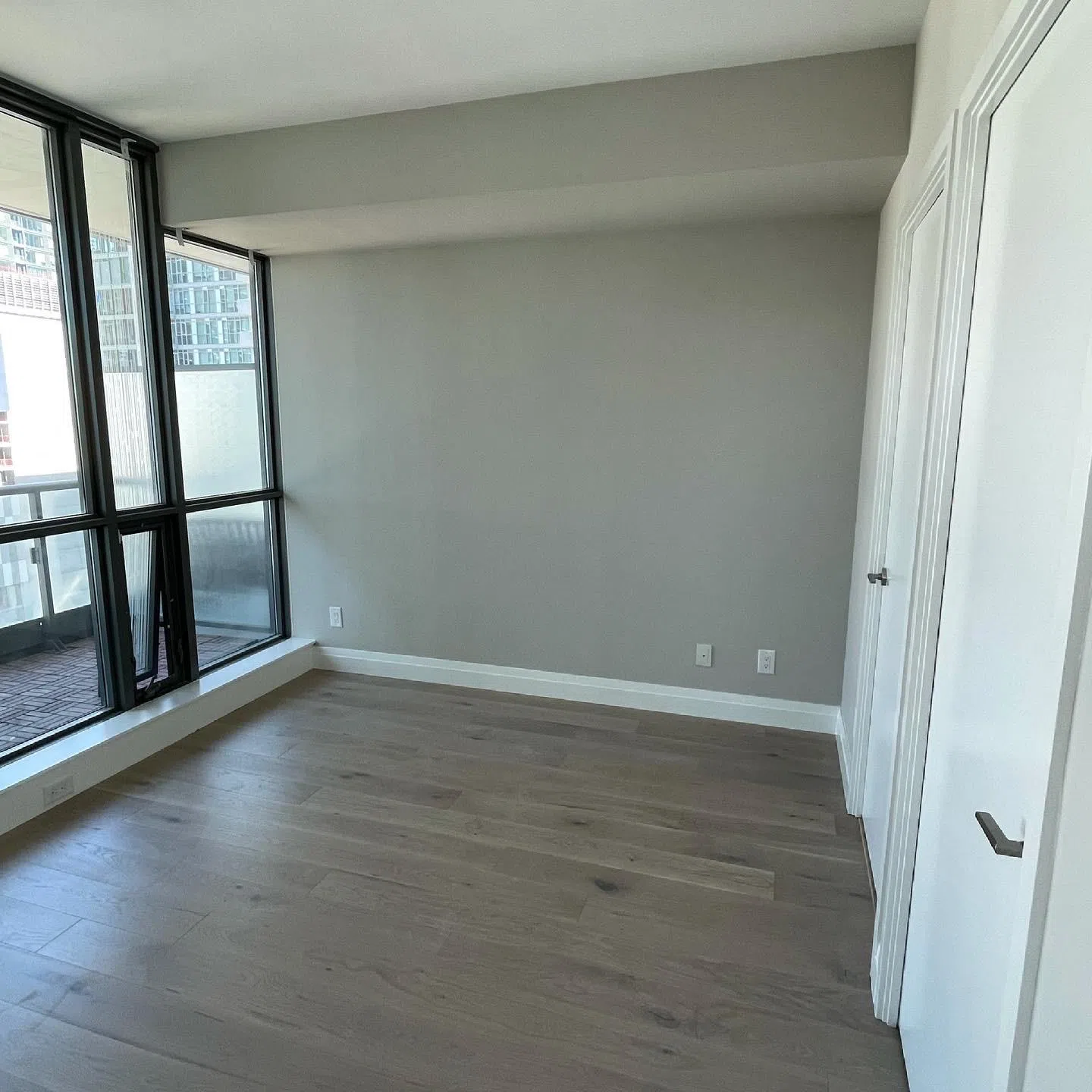
Here is what we put in every condo ceiling kit:
- Extension pole. Lets you roll from the floor, keep a steady pace, and reach across the ceiling without constantly repositioning a ladder. This alone prevents most lap marks.
- A quality roller, around 13mm nap. A thicker nap holds more paint, so you cover more area before the edge dries.
- Dead-flat ceiling paint. Flat scatters light and hides imperfections; anything shinier broadcasts every ridge and seam.
- Stain-blocking primer. For water stains and patches, regular paint will not seal them.
- Angled sash brush, drop sheets, and painter''s tape for cutting in and protecting walls and floors.
On sheen, we are firm. Dead-flat is the sheen that hides imperfections best, which is exactly what you want overhead. If you want the manufacturer's breakdown, Benjamin Moore explains how to choose a paint finish by room and surface. If you are still deciding on finishes for the rest of the room, picking the right ceiling/wall finish walks through where each sheen belongs.
How do you paint a condo ceiling step by step?
A good ceiling comes from sequence, not speed. Rushing is what produces the patchy, striped result. Follow these steps in order and the finish takes care of itself.
Step 1: Prep the surface
Clear or cover the room, then check the ceiling for problems. Patch any cracks or holes, sand them smooth, and dust the surface so the paint bonds. A clean, sound surface is the foundation of every even ceiling. For a complete room-by-room walkthrough, see the full prep checklist. If you are looking at a popcorn ceiling instead, the cost of a smooth ceiling finish after removal is the number to budget for the final look.
Step 2: Diagnose and prime water/smoke stains
Spot-prime any yellow or brown ceiling stains before you do anything else. Two stains look similar and need different responses: water stains and smoke/nicotine stains. Both bleed through latex paint without a solvent-based primer barrier.
Diagnostic first. Mix 1 part household bleach with 5 parts water and apply a small amount to an inconspicuous edge of the stain. Wait 15 minutes. If the stain fades or lightens visibly, it is a water stain, and you can proceed with priming. If it stays unchanged or shows fuzzy, irregular edges, you may have mould, which is a remediation conversation per Health Canada's mould guidance rather than a paint conversation. Smoke and nicotine stains generally don't change with the bleach test but show a brownish-yellow tone consistent across the area rather than the ringed edges of a water stain.
The primer that holds. Spot-prime with Zinsser B-I-N shellac primer (recoat in 45 minutes per its TDS, blocks tannin, water, smoke, nicotine, and fire stains in one coat) or Zinsser Cover Stain oil-based (slower dry, similar performance). Never use a latex stain-blocker on real water or smoke stains; they fail within weeks. For water stains specifically, confirm the leak source is fixed and the cavity is dry before priming. Per Health Canada, drywall wet more than 48 hours should be replaced, not primed over.
Step 3: Cut in the edges
With an angled brush, cut a clean band of ceiling paint around the perimeter where the ceiling meets the walls, plus around any fixtures. Cut in only as far ahead as you can roll into while wet, so the brushed edge blends with the rolled paint.
Step 4: Roll in small sections
Load the roller and work in roughly three-by-three-foot sections. Roll each fresh section back into the still-wet edge of the last one. This is the single move that keeps a wet edge and prevents lap marks. Keep moving across the ceiling in one direction.
Step 5: Apply the second coat
Once the first coat is dry to the touch and the manufacturer''s recoat time has passed, repeat the cut-in and roll for a second coat. Two coats is what produces an even, consistent film. We have never delivered a one-coat ceiling.
How do you avoid lap marks on a ceiling?
Lap marks are the number one DIY ceiling redo we see in Toronto, and they come down to one thing: the paint dried before you rolled the next section into it. Beating them is part technique, part conditions, part product.
The technique:
- Work in 3-foot by 3-foot sections. Bigger sections dry at the edges before you can blend back into them.
- Roll in a "W" or zigzag pattern, then back-roll in straight lines in one direction. The W lays down the paint; the straight back-roll levels it out.
- Always roll a fresh section back into the still-wet edge of the previous one, never into paint that has started to set.
- Cut in only as far ahead as you can roll into within 10 minutes. Cut a band, roll into it, repeat.
- First coat one direction (length of room), second coat perpendicular (width of room). Cross-rolling between coats hides any direction-specific roller texture.
The tools:
- 1/2-inch (13 mm) nap roller cover in wool-blend or microfiber. Cheap synthetic naps shed and stipple.
- Extension pole, minimum 4 feet for 8-foot ceilings, 6 feet for 9-foot ceilings. Lets you roll at a steady pace without repositioning a ladder.
- 2.5-inch angled sash brush for cutting in the perimeter.
The conditions are the part most DIYers ignore. Heat and moving air dry paint fast, which is exactly when lap marks appear. Turn the HVAC off during ceiling work, close operable windows, and avoid painting on hot summer afternoons. Lakeside Toronto condos (Humber Bay Shores, Harbourfront, CityPlace) have noticeably faster surface dry in summer because of the lake humidity gradient. Schedule ceiling work in those buildings for early morning or overcast days.
The product: dead-flat sheen scatters light and hides any remaining technique flaws. A satin or eggshell ceiling, sometimes pushed by designers for "depth," turns every lap mark into a permanent visible stripe under condo pot lights.
Why paint the ceiling before the walls?
The order is always ceiling first, then walls, then trim. This is not a preference. It is how you avoid redoing work. Rolling a ceiling throws spatter and slight overspray onto the top of the walls. Because the walls are not painted yet, that does not matter.
Once the ceiling dries, your wall paint cleanly covers any overspray near the corners. Trim comes last because it is the most detailed work and belongs on top of finished walls. Reverse the order and you will dirty fresh walls with ceiling spatter every time. Top-down saves time on every job we do.
What about high ceilings in Toronto condos?
High ceilings change the math on cost and safety. A standard 8 to 9 foot ceiling is a manageable DIY project with an extension pole and a step ladder. Ceilings in the 10 to 12 foot range add roughly 20 to 40 percent to the cost, because they need taller ladders or longer poles and the cutting-in is slower and more careful.
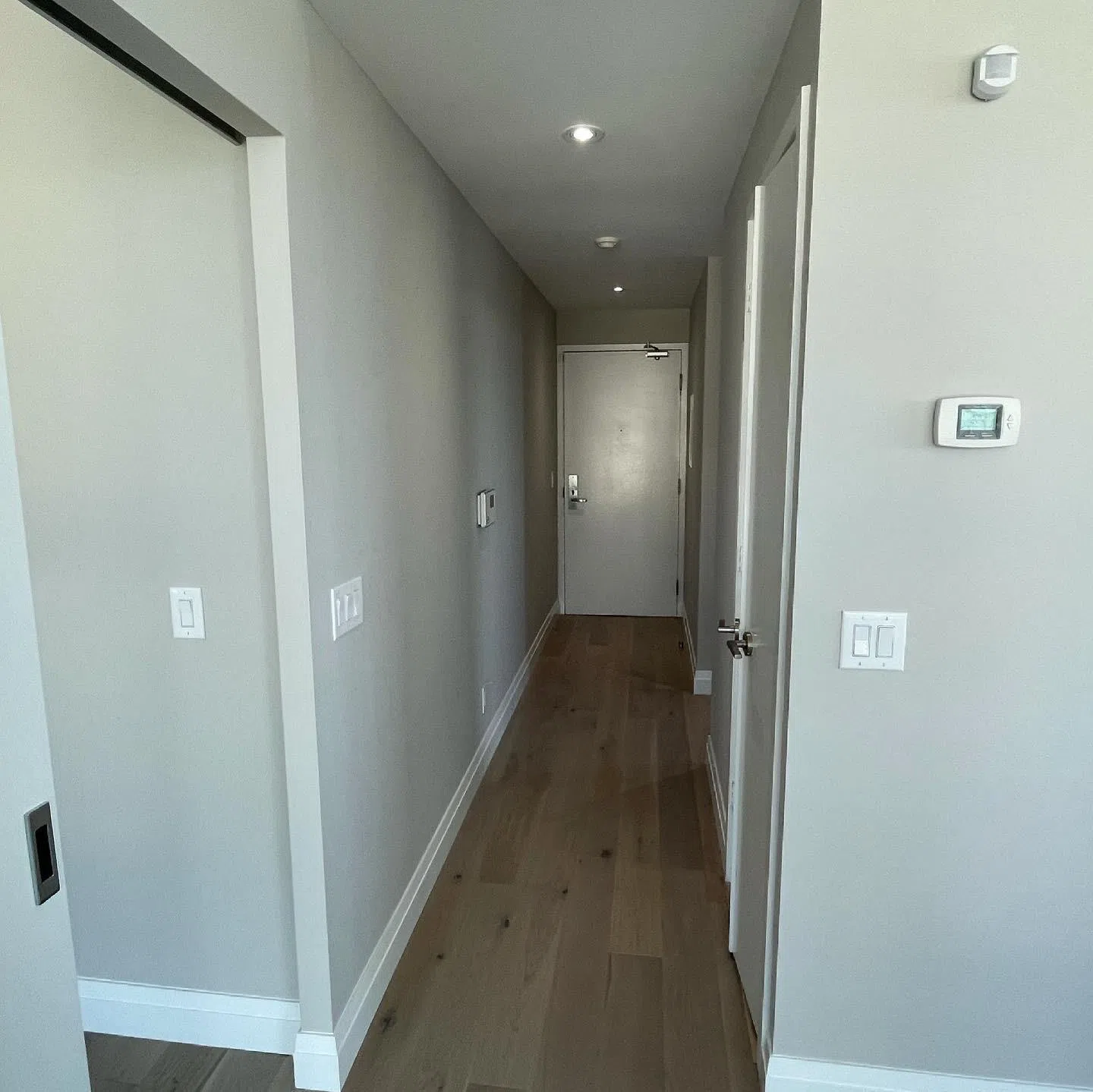
Safety is the bigger concern. Working at height over stairs or open spaces carries a real fall risk, and the slower pace makes keeping a wet edge harder, which is exactly when lap marks appear. In our experience, high ceilings are the most common job where a confident DIYer ends up calling us to rescue the work.
Toronto's glass towers make this a common situation. Newer buildings in CityPlace, Fort York, and Humber Bay Shores frequently come with 10 to 12 foot ceilings in the main living space, and those rooms need extension poles or proper scaffolding rather than a single step ladder. That extra equipment and the slower, more careful pace are why tall-ceiling rooms run 20 to 40 percent more than a standard-height room of the same footprint.
A high-ceiling job we remember
We took on a Humber Bay Shores unit with roughly 10-foot living-room ceilings facing the lake. A ladder was not safe over the open stairwell, so we set up light scaffolding to keep a steady reach and an unbroken wet edge across the whole span. The owner had tried one wall-side section himself the weekend before and left a clear band of lap marks where the edge dried while he climbed down to reposition. Working off the scaffold instead let us roll it out in one pass with no stripes.
Loft buildings are their own category. Hard lofts in King West and the Distillery District often have a raw concrete ceiling rather than drywall, and concrete needs a bonding or masonry primer before any flat paint goes on, or it peels. Units near Harbourfront and the lake also carry more humidity, which slows drying and makes a cool, low-airflow paint window even more important for a clean finish.
What are the pro tips for a flawless ceiling?
A handful of small habits separate a clean ceiling from a striped one. None of them are complicated, and together they account for nearly every flawless ceiling we deliver. Build them into your routine before you load the roller.
- Prime water stains first. Hit every stain with a stain-blocking primer before anything else, because regular paint lets the stain bleed straight back through within days.
- Use a 13mm nap roller on an extension pole. The thicker nap holds more paint and the pole keeps a steady, floor-level pace so you cover ground before the edge sets.
- Keep a wet edge in three-foot sections. Roll each fresh section back into the still-wet edge of the last one, never into paint that has begun to dry.
- Paint on a cool, overcast day. Heat and moving air dry paint fast, so close the windows and shut off fans and HVAC to slow the dry time.
- Choose a dead-flat sheen. Flat scatters light and hides roller texture and seams; anything shinier broadcasts every ridge under condo pot lights.
- Do the ceiling before the walls. Top-down sequencing means ceiling spatter lands on walls you have not painted yet, and your wall coat covers it cleanly.
What do pros charge to paint a condo ceiling?
Flat condo ceilings in Toronto cost about $1.50 to $2.25 per square foot to paint professionally, which lands around $200 to $400 per room. That covers prep, two coats of quality ceiling paint, and cleanup. The table below shows typical ranges; stains, popcorn texture, and repairs add to the scope.
| Room / situation | Standard height (8 to 9 ft) | High ceiling (10 to 12 ft) |
|---|---|---|
| Bedroom or small room | $200 to $300 | $260 to $400 |
| Living / dining area | $300 to $400 | $380 to $560 |
| Per square foot | $1.50 to $2.25 | $1.80 to $3.15 |
The most accurate price comes from a quick walkthrough or a few photos, so we can measure the real square footage and flag anything that changes the scope before quoting.
When should you call a pro?
Call a pro when the ceiling is high, stained, textured, or when a flawless flat finish matters for a sale or a fresh renovation. Standard 8 to 9 foot flat ceilings are doable for a careful DIYer, but 10 to 12 foot ceilings, popcorn removal, and recurring water stains are where the equipment, height, and prep tip the balance toward hiring out. Once you add ladder rental and the cost of a likely redo, the pro route is often cheaper than it looks.
Benjamin Moore dead-flat, drop sheets, and a real ladder, with a 5-year warranty on the workmanship. If your ceiling needs more than a weekend of confidence, send the dimensions and a photo and we will measure it properly. For the bigger repainting picture, our complete condo painting walkthrough covers the rest.
Chad Saygili is co-owner of Condo Painters Pro, a Toronto condo painting specialist. He has spent years painting condos across Toronto and the GTA, works exclusively with Benjamin Moore, and backs every job with a 5-year workmanship warranty.
MORE ABOUT OUR TEAM →